
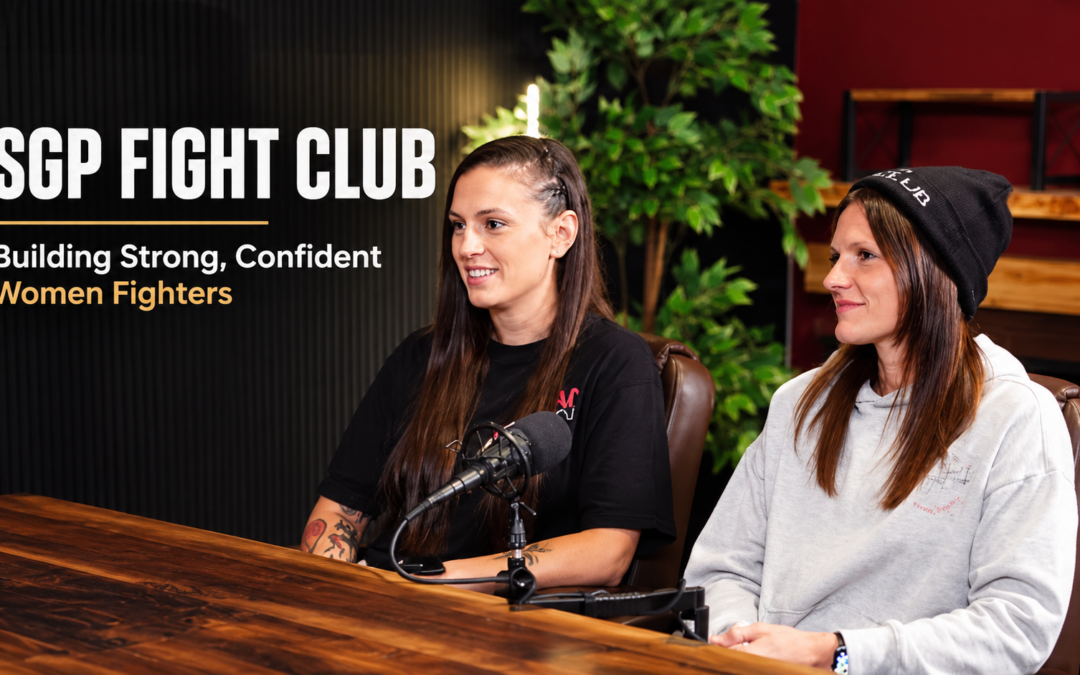
SGP Fight Club Builds Strong, Confident Women Fighters
What does it take to become a stronger, more confident fighter? It takes more than throwing punches and learning how to kick. It takes discipline, mental toughness, consistent training, and a community that believes in you.
In the latest episode of Brews & Banter, Sarah, owner of SGP Fight Club, and Emily, an instructor and active fighter, join the conversation to share the story behind their unique female-only martial arts gym. From intense fight camps to the challenges women face in competitive combat sports, they offer an honest look at what it takes to build skilled fighters and confident women.
Their story is about more than winning fights. It is about creating a space where women can challenge themselves, learn practical combat skills, develop resilience, and discover what they are capable of achieving.
What Makes SGP Fight Club Different?
SGP Fight Club was built around a simple but important idea: women deserve an environment where they can train seriously, develop their fighting skills, and measure their progress against other women.
For Sarah, the need for such a space came from personal experience. Having trained in martial arts from an early age, she often found herself as the only female in training sessions and competitions. Although she could practice with male partners, it was difficult to accurately assess her abilities when her training partners were not always able to match her intensity.
That experience helped shape her vision for SGP Fight Club.
The gym offers a female-only training environment where women can learn, practice, and grow alongside people who understand their goals and challenges. Whether someone wants to compete or simply become more confident in their abilities, the emphasis is on developing real skills.
The training combines several martial arts disciplines, including:
- Boxing: Developing punching technique, defensive movement, timing, and accuracy.
- Kickboxing: Combining punches and kicks with footwork, coordination, and effective combinations.
- Muay Thai: Building striking skills and preparing fighters for the demands of competition.
- Traditional martial arts influences: Applying the foundations of Sarah’s extensive martial arts background to training and instruction.
The gym primarily prepares competitors for kickboxing and Muay Thai bouts, while also welcoming women who want to train without stepping into the ring.
Building a Fight Club During a Pandemic
Starting a business is challenging under normal circumstances. Building a martial arts gym during a global pandemic presented an entirely different set of obstacles.
When the pandemic disrupted traditional training, Sarah adapted by offering virtual classes, including cardio kickboxing sessions. The gym even attracted participants from Australia, allowing the team to build relationships with members far beyond their immediate community.
As restrictions changed, outdoor classes helped bring training back into a shared physical environment. Emily eventually joined the team during this period, and the gym continued working toward establishing a more permanent training space.
Virtual training provided a way to keep people moving, but it also highlighted the importance of hands-on instruction in martial arts. Correcting someone’s stance, adjusting their kicking technique, and helping them improve their defensive positioning are much more difficult through a screen.
The experience demonstrated Sarah’s willingness to adapt rather than abandon her vision. What began as a difficult period became part of the story behind the community SGP Fight Club continues to build.
What Really Happens During Fight Camp?
Watching a fighter enter the ring can make the journey look exciting and straightforward. The audience sees the walkout, the atmosphere, the exchanges, and the final result. What often goes unnoticed is the preparation that happens long before fight night.
During the interview, Sarah and Emily explain that preparing for a fight involves a demanding training schedule that extends well beyond regular gym sessions.
Their fight camps typically run for eight weeks, with fighters following structured training plans designed to improve conditioning, strength, endurance, and technique.
Depending on the stage of camp, preparation can include:
- Strength training for the upper and lower body.
- Roadwork, progressing from shorter sessions to longer runs.
- Sprinting and hill training to improve conditioning.
- Jump rope exercises to develop rhythm and footwork.
- Bag work and shadowboxing to sharpen striking technique.
- Consistent practice outside the gym to reinforce skills.
Much of this work happens independently. Fighters must take responsibility for completing their assignments, staying consistent, and pushing through the days when motivation is low.
As Emily explains, there is a tremendous amount of work happening behind the scenes that spectators never see.
That preparation is not simply about becoming physically stronger. It is about developing the stamina, discipline, and confidence required to perform under pressure.
The Mental Battle Behind Every Fight
One of the most compelling parts of the conversation is the emphasis on mental resilience.
Fighting is physically demanding, but preparing for competition also requires a fighter to manage stress, stay focused, and balance training with everyday responsibilities.
Emily speaks openly about the challenge of combining fight camp with family life. As a mother of two young girls, she still has school lunches to prepare, work to complete, and family responsibilities to manage while maintaining her training schedule.
This highlights a reality that many people overlook: fighters do not put their entire lives on hold when they prepare for competition.
They must find ways to keep moving forward even when life becomes complicated.
Mental preparation also involves recognizing when to ask for help. A fighter may be physically capable of completing a workout but struggle with the emotional pressure of competition or the demands of an intense schedule.
Sarah and Emily acknowledge that not everyone who initially wants to fight will enjoy the full experience of fight camp. The reality of the workload can change someone’s perspective. Others discover a passion they did not realize they had and go on to pursue multiple fights.
Both outcomes are part of the process.
At SGP Fight Club, the goal is not to pressure every member into competition. The gym welcomes women who simply want to train, improve their fitness, learn striking techniques, and develop greater confidence.
Why Controlled Sparring and Teamwork Matter
Sparring is an important part of preparing for combat sports because it allows fighters to practice their skills against a moving opponent rather than relying exclusively on bags and drills.
However, effective sparring requires control, awareness, and respect.
Sarah explains that instructors sometimes need to step in when training becomes too intense. One fighter may respond to a hard strike by increasing their own power, causing the other person to retaliate. Without proper control, a technical training session can quickly become unnecessarily aggressive.
The coaching team works to prevent this cycle by managing the intensity and changing partners when needed.
SGP Fight Club also organizes open sparring sessions with selected participants from other gyms. These sessions allow fighters to experience different styles, movement patterns, and approaches to combat.
Training with different partners can reveal weaknesses that might not be obvious when practicing with familiar teammates. It also helps competitors become more comfortable adapting to unfamiliar opponents.
Safety and respect remain important considerations. Participants are vetted rather than simply being allowed to show up without arrangements.
The aim is to help fighters develop their abilities in a controlled environment where learning comes before ego.
The Challenge of Finding Fair Matches for Women
Women’s participation in combat sports continues to grow, but finding suitable opponents remains a challenge.
As Sarah and Emily explain, female fighters often have a smaller pool of potential opponents than male fighters. Matching competitors requires more than finding someone willing to fight. Coaches must consider weight class, experience, skill level, and whether the matchup is appropriate.
These factors can make the process lengthy and frustrating.
A fighter may train consistently for weeks while waiting for a suitable opponent. Even when an offer comes in, the coaching team must carefully evaluate whether the proposed matchup makes sense.
Sarah makes it clear that she is selective about the fights she accepts. She would rather turn down an opportunity than put one of her fighters into an unfair contest.
That approach reflects an important responsibility of coaching: protecting an athlete’s development and well-being matters more than simply getting them onto a fight card.
The challenge also highlights why dedicated training environments for women can be valuable. By helping women develop their skills and prepare for competition, gyms like SGP Fight Club contribute to a stronger community of female fighters.
Creating a Space for Self-Defense and Confidence
Not every woman who walks into a martial arts gym wants to become a competitive fighter.
Some want to improve their fitness. Others want to challenge themselves, learn a new skill, or feel more confident in unfamiliar situations.
Sarah explains that one of her goals is to help women learn how to defend themselves through combat training. Understanding striking techniques, recognizing opportunities to respond, and practicing defensive movement can all contribute to a better foundation of self-defense skills.
The gym has also discussed offering self-defense classes in response to interest from women who want to learn practical techniques without necessarily committing to regular fight training.
This distinction matters because confidence does not have to come from competing.
Learning a new skill, improving physical conditioning, and becoming more comfortable under pressure can be valuable achievements in their own right. A woman can train consistently, become a stronger martial artist, and enjoy the community without ever entering a ring.
SGP Fight Club’s approach leaves room for both paths: those who want to compete and those who simply want to become stronger and more capable.
Facing Online Negativity and Misconceptions
Building a female-focused combat sports community can also attract criticism, particularly online.
During the interview, Sarah and Emily discuss encountering sexist comments and negative reactions to their social media posts. While most people they encounter are supportive, the occasional hostile comment can still be frustrating.
They describe choosing different ways to respond, including ignoring comments, deleting them, reporting them, or occasionally answering back.
The experience illustrates a wider challenge for women in traditionally male-dominated sports. Female athletes and coaches may have to deal with criticism that has little to do with their actual skills or accomplishments.
Despite that negativity, SGP Fight Club continues to focus on its mission: helping women train, improve, and pursue their goals.
Support from members, friends, and other people in the martial arts community also makes a difference. A positive training environment is built not only through good coaching but through people who respect one another and stand behind their teammates.
More Than a Gym: A Community That Builds Fighters
Throughout the conversation, one theme stands out: developing a fighter is about much more than teaching punches and kicks.
It requires patience, consistency, careful coaching, and an understanding that every student has different goals. Some will discover a passion for competition, while others will find satisfaction in improving their fitness or learning practical combat skills.
Sarah’s long martial arts background and Emily’s experience as both an instructor and fighter help shape the gym’s training culture. Their work also demonstrates the importance of learning from other coaches, collaborating with other gyms, and continually developing as instructors.
By creating opportunities for women to train together, practice with different partners, and prepare for competition, SGP Fight Club is helping its members build more than physical strength.
It is helping them develop discipline, resilience, and confidence that can extend beyond the gym.
Watch the Full Brews & Banter Interview
How do you prepare for the pressure of fight camp? What makes finding an opponent so difficult for female fighters? And what does it take to build a martial arts community around women’s empowerment?
Sarah and Emily explore these questions and more in this episode of Brews & Banter, sharing personal experiences, behind-the-scenes insights, and plenty of candid conversation along the way.
Watch the full episode: SGP Fight Club Builds Strong, Confident Women Fighters
To learn more about the gym, visit SGP Fight Club or find them on social media.
Subscribe to Brews & Banter for more conversations with interesting people, inspiring stories, and fresh perspectives from the world of combat sports.
Because becoming a stronger fighter starts with showing up, putting in the work, and believing you belong.
Episode: SGP Fight Club Builds Strong, Confident Women Fighters
Podcast: Brews & Banter
Published: October 12, 2026
#SGPFightClub #WomensMartialArts #KickboxingTraining #MuayThai #WomensEmpowerment #BrewsAndBanter